Article
Suffering and Hope: Reflections on the Texas Hill Country Floods
by The Rev. Reagan Cocke
Hope in the Midst of Suffering
As a priest, I have spoken aloud these words well over a hundred times in the liturgy for the Burial of the Dead:
As for me, I know that my Redeemer lives
and that at the last he will stand upon the earth.
After my awaking, he will raise me up;
and in my body I shall see God.
I myself shall see, and my eyes behold him
who is my friend and not a stranger.
Refuting his misguided friends, who had declared that his suffering was caused by his own sin, Job spoke the words above (Job 19:25-26). Burning through the dross of their thinking, he found a prophetic spec of gold—one of justice and hope of eternal life in the future death and resurrection of Jesus, unbeknownst to him at the time. Job’s words are the earliest in the Bible that look toward what God will do for us as our Redeemer and friend.
The wisdom of Job gives us insight into the reality of hope that we too can cling to in the midst of suffering and when we feel God has abandoned us. Hope is an anchor in an ocean of raging waters.
Where Was God?
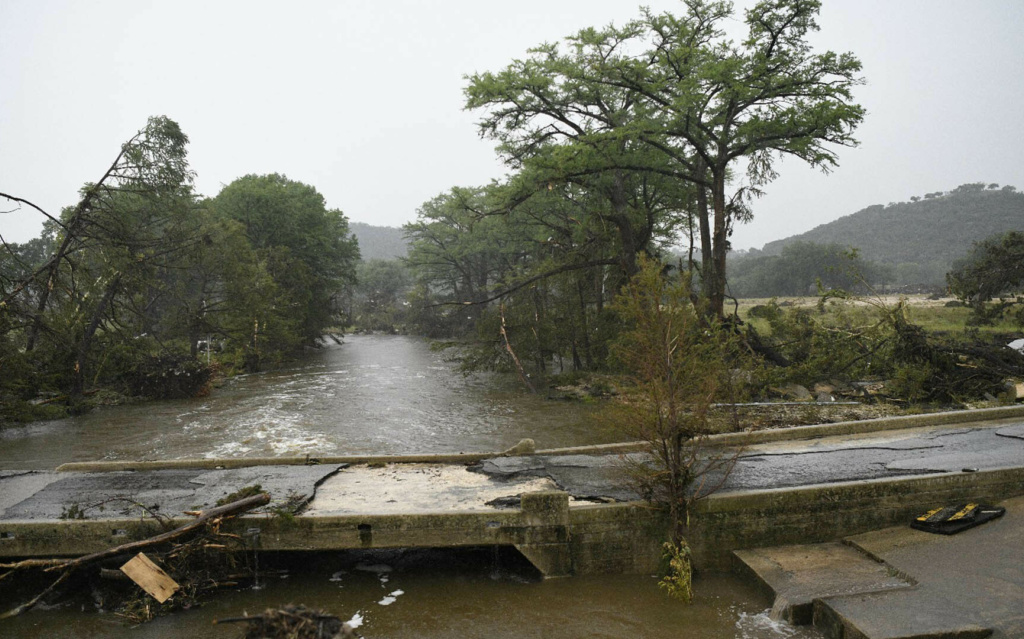
On the morning of July 4, 2025, I was in the Texas Hill Country at our family’s lake house, some forty miles southeast of Hunt. I had not slept well the night before with all the distant rumbling thunder and lightning flashing into our uncurtained bedroom. When I tuned in to the morning news, I heard the first stories of the devastating flood in the Hunt area, a place where my daughter had attended camp for over a decade as a camper and then a counselor. Soon I received disheartening texts. I made phone calls to pray with people whose family members were unaccounted for. As the news worsened, I wondered, along with so many others, where was God? How had he allowed this tragedy to unfold?
Two days later, between our 9:00 and 11:15 service, I led a prayer time in the Chapel. People sobbed and prayed for the Lord to act mightily to save the missing. So moved by the grief of those praying with me, I let Leigh know I could not be celebrant at the next service. I did not think I could stand before the congregation in so much pain—a congregation that asked the same questions: where was God and how did he allow this to happen?
I do know that there is a force in the universe that is more powerful than anything I can say or do. That power is love. Love binds and holds all things together.
In A Grief Observed, C. S. Lewis journaled an eloquent statement of rediscovering his faith after he found himself inconsolable at the death of his wife, Joy Davidman. Having married late in life, he found himself alone again and questioning his faith. To defend himself against the loss of belief in God, Lewis wrote freely, confessing his doubts, his rage, and his awareness of human frailty.
“‘Where is she now?’ he asked. Kind people have said to me, ‘She is with God.’ In one sense that is most certain. She is, like God, incomprehensible and unimaginable. But I find that this question, however important it may be in itself, is not after all very important in relation to grief. … You tell me, ‘she goes on.’ But my heart and body are crying out, come back, come back. … I know that the thing I want is exactly the think I can never get. … Talk to me about the truth of religion and I’ll listen gladly. Talk to me about the duty of religion and I’ll listen submissively. But don’t come talking to me about the consolations of religion or I shall suspect that you don’t understand.”
I am in the consolation business. I want to bring comfort, relief, and solace to the inconsolable, the grieving, and the anguished. I want to pluck out what seem to be helpful verses of scripture and use them like a Band-Aid or a balm on a searing wound. But when the tragedy is overwhelming and real and right in your face, simple verses and answers are simply wrong.
However, I do know that there is a force in the universe that is more powerful than anything I can say or do. That power is love. Love binds and holds all things together. That power is the one and only true power: God. As the Bible tells us, “God is love.”
Love not only binds us to God but to one another. When someone we love dies and is taken away from us, that bond of love becomes a deep, painful wound. If not for love, there would be no wound, no pain, no sorrow, no grief, no seemingly unbearable loss. But because there is love, we hurt. There is no sugar-coating this. There is no instant balm. There is no painless road ahead after the death of so many people or even if only one person you love dies.
As Dietrich Bonhoeffer once wrote in Letters and Papers from Prison, “Nothing can make up for the absence of someone we love. God does not fill the gap in our lives, but on the contrary, he keeps it empty and helps us to keep alive our former communion with each other, even at the cost of pain. The dearer and richer our memories, the more difficult the separation.”
Over time, however, gratitude for having known and loved those we have lost can transform painful memories into precious jewels we can remember, examine, and give God thanks for, having lived with, known, and loved them. But it takes time and work, and because God is love, healing comes, even if it takes years.
God in the Midst of Suffering
On July 18, 2025, we held a funeral service for four family members who died in the flood. Where was God? Gathered in prayer and worship in our sanctuary, God was with us, dwelling in us through his Spirit. Christians stand in prayer when and where the world is in pain so that God’s own Spirit may be present and intercede, as Paul reminds us in Romans 8:23. The Spirit comes to dwell in the midst of the world in the persons of Jesus’ faithful followers. The Spirit inhabits that pain, and calls out to the Father from his darkest depths, by means of God’s people being in Spirit-inspired, Spirit-inhabited prayer.
God’s plan is not to rescue humans from creation so that we can go and be with him safely in heaven. His plan has always been to come and be with us, his image-bearing creatures. God comes into the hearts and lives of puzzled and frightened believers who don’t know what to pray for, so that precisely in our prayer of unknowing, God himself will be at work, interceding from within his creation.
Like Jesus on the cross, God’s people can feel as though they have been forsaken entirely. How can we believe in an all-powerful and all-loving God in the face of the terrible evil and suffering in the world, especially in the horrors of the flooding of the Guadalupe River in Hunt? The Bible tells the story of what God does. Start with the God of Abraham, Isaac, and Jacob, the God who grieves over the pain of the world and the failings of his own people, the God who in the end reveals himself in and as the crucified Messiah, the God who then sends the Spirit into the hearts of his people so that God himself may, in and through his people, stand at the heart of the pain of the world so that the world may be healed.
Our Calling in a Hurting World
The floods in Texas are not the only place where the world groans. Even as we mourn here at home, wars, earthquakes, famines, and disasters continue around the globe. On June 24, back-to-back earthquakes struck Venezuela. According to reports, nearly 60,000 buildings were destroyed or significantly damaged. The death toll may end up being the same or more. Whether suffering is next door or across an ocean, the Christian calling remains the same: to stand in prayer at the heart of a world in pain. This Christian vocation will come for us whether we’re ready or not. Standing at the place of pain and suffering isn’t just something awful to get through; it is part of the means by which God is working out, in the present time, his glorious rescuing purposes for his world as we become the people through whom God is accomplishing his saving plan for the whole creation.
The Hope that Remains
Again, in the words of Job:
As for me, I know that my Redeemer lives
and that at the last he will stand upon the earth.
After my awaking, he will raise me up;
and in my body I shall see God.
I myself shall see, and my eyes behold him
who is my friend and not a stranger.
Do you see that God will one day stand upon the earth? He doesn’t take us to heaven but comes to earth. Do you see that after our deaths he will raise us up in bodily form? We will receive resurrection bodies just like Jesus. Do you see that we will see our Redeemer face to face as a true friend? That is our hope, even in the midst of suffering, because God is love and God accomplishes what he promises, even if we doubt it like Thomas.
Thomas reminds us that faithful people must speak both their doubts and their hope aloud. He honestly confessed what he could not yet believe until he encountered the risen Jesus. The pain of suffering and the balm of hope must be spoken out loud. When we remain in silence for too long in our own pain without hope, despair can begin to take root. God has given us one another to suffer together and to hope together. If you find yourself alone and without hope, thinking no one can understand your pain, open up to a friend, a family member, a minister or therapist, and, of course, open up to God, who is your Redeemer and friend.
O God, who never forsakes those who hope in you
Grant that through your Spirit
We may keep the hope you have given us
By your Word as an anchor for our spirits
To preserve us sure and steadfast
Unshaken and secure in all the storms of life
Through Jesus Christ our Lord
Amen
If this anniversary has stirred grief for you, or if you have been carrying burdens for some time, the Rev. Louise Samuelson, the Rev. John Sundara, or I would be honored to pray with you.
Header Photo Credit: Texas Floods Devastate Local Communities by World Central Kitchen, via Wikimedia Commons, licensed under CC BY 4.0.